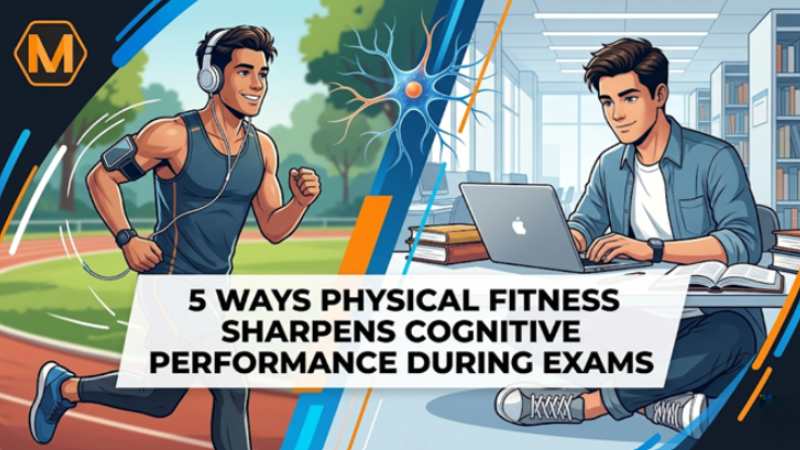
The silence of a library during finals week is often heavy with the scent of caffeine and the sound of frantic page-turning. For most undergraduate students, the instinct is to “hunker down”—to sacrifice every waking hour to a desk in hopes of absorbing just one more complex theory or mathematical formula. However, modern neuroscience suggests that the key to unlocking a higher GPA isn’t found at the bottom of an energy drink, but rather on the treadmill or the yoga mat.
The relationship between the body and the brain is far more intimate than a simple support system. When you engage in physical activity, you aren’t just building muscle; you are literally retooling your cognitive hardware. Research consistently shows that movement acts as a biological “reset” button for the mind, clearing the mental fog that accumulates after hours of staring at a screen. For those navigating high-pressure periods, utilizing professional exam help can provide the necessary breathing room to step away from the desk and into the gym without falling behind.
1. The Chemistry of Focus: BDNF and Neuroplasticity
One of the most significant ways exercise boosts the brain is through the production of Brain-Derived Neurotrophic Factor (BDNF). Scientists often refer to BDNF as “Miracle-Gro” for the brain. This protein helps repair failing brain cells and stimulates the growth of new ones, particularly in the hippocampus—the region responsible for verbal memory and learning.
When you perform aerobic exercises like running, swimming, or cycling, your body floods the brain with BDNF. This creates an environment where neuroplasticity—the brain’s ability to form and reorganize synaptic connections—is maximized. For a student, this means that the information you read after a workout is more likely to “stick” than information read during a 4:00 AM cram session.
2. Reducing Cortisol and the “Exam Fog”
Stress is the primary enemy of academic performance. During exams, the body produces high levels of cortisol, the “stress hormone.” In small doses, cortisol helps you stay alert, but chronic elevation leads to what students commonly call “brain fog.” This is characterized by a lack of mental clarity, poor decision-making, and difficulty retrieving stored information.
Physical fitness acts as a natural buffer against cortisol. When you exercise, you put your body through a controlled form of stress, which teaches your nervous system to recover more efficiently. Over time, this raises your “stress threshold.” By maintaining a fitness routine, you ensure that when you sit down for a three-hour paper, your brain remains calm and analytical rather than shifting into a panicked “fight or flight” mode.
3. Oxygenation and Cerebral Blood Flow
The brain is a greedy organ; it accounts for only about 2% of your body weight but consumes 20% of your oxygen and energy. Physical activity increases your heart rate, which pumps more oxygen-rich blood to the brain. This surge in blood flow specifically targets the prefrontal cortex—the area of the brain used for executive functions like logic, reasoning, and impulse control.
Improved circulation ensures that your neurons are receiving the glucose and oxygen they need to fire at maximum capacity. This is why many students find they have their “lightbulb moments” while walking or jogging. The increased blood flow literally powers up the parts of the brain that solve problems.
4. Sleep Quality and Memory Consolidation
You don’t actually “learn” while you are studying; you learn while you are sleeping. Sleep is the period when the brain moves information from short-term “buffer” memory to long-term storage. However, exam-related anxiety often leads to insomnia, which sabotages this vital process.
Consistent physical activity is one of the most effective ways to improve sleep architecture. It helps you fall asleep faster and increases the duration of “Deep Sleep” (Slow Wave Sleep). This is the specific stage of sleep where memory consolidation occurs. If you are struggling to balance a heavy workload with a healthy sleep schedule, leveraging resources from MyAssignmentHelp can ensure your projects are handled with academic precision, allowing you to prioritize the rest your brain needs to function at a high level.
5. Boosting Mood and Motivation
The psychological benefits of fitness are just as critical as the physiological ones. Exercise releases endorphins and dopamine—the body’s natural feel-good chemicals. During the grueling weeks of finals, it is easy to fall into a cycle of burnout and low motivation. A quick 20-minute workout can provide a dopamine hit that restores your “can-do” attitude.
When you feel physically strong, you approach your studies with more confidence. This mental resilience is often the deciding factor between a student who gives up on a difficult prompt and one who pushes through to find the solution.
Comparison: Physical Activity vs. Sedentary Cramming
| Feature | Sedentary Cramming | Active Study Routine |
| Information Retention | Low (Passive learning) | High (Active consolidation) |
| Stress Levels | High Cortisol | Managed Cortisol |
| Focus Duration | 20–30 Minutes | 60–90 Minutes |
| Mental Energy | Rapidly Declining | Sustained & Recharged |
| Physical Health | Stiff neck, eye strain | Improved posture, energy |
Making the Most of Your Study Breaks
To truly rank among the top performers in your class, you must treat your study breaks with as much intention as your study hours. A “bad” break involves scrolling through social media, which further drains your mental energy. A “good” break involves movement.
The 50/10 Rule: For every 50 minutes of deep work, take a 10-minute movement break. This isn’t just about resting; it’s about stimulating the brain for the next block of work. Stretch, do a set of jumping jacks, or take a quick walk around the block. These micro-bursts of fitness keep your blood circulating and prevent the mental stagnation that leads to errors.
The Global Perspective on Student Health
Universities in the UK, USA, Australia, and Canada are increasingly integrating “Wellness Centers” into their libraries. They recognize that a student’s physical state is a direct predictor of their academic output. Whether you are studying Architecture in London or Law in Dubai, the biology of the human brain remains the same: it requires movement to thrive.
Integrating fitness into your academic lifestyle isn’t about becoming a professional athlete; it’s about being a professional student. By treating your body as an engine for your mind, you ensure that you aren’t just working harder, but working smarter.
Frequently Asked Questions (FAQ)
Q: Does it matter what kind of exercise I do before an exam?
Ans: Yes. Aerobic exercise (like jogging or swimming) is generally best for memory and BDNF production. High-intensity interval training (HIIT) is great for mood, but very heavy lifting right before an exam might leave you physically exhausted. Aim for moderate intensity.
Q: How long should a workout be to see cognitive benefits?
Ans: Even 20 minutes of moderate activity can increase blood flow to the brain and improve focus for the next two to three hours.
Q: Can I exercise while I study?
Ans: Some students find that walking on a treadmill at a slow pace while reading or listening to lectures helps them focus. However, for deep analytical tasks, it is usually better to separate the two.
Q: Is it better to exercise in the morning or evening during finals?
Ans: Morning exercise can set a positive tone for the day and jumpstart your focus. However, if you are an evening studier, a late afternoon workout can help clear the “mid-day slump.”
Q: What if I don’t have time to go to the gym?
Ans: Fitness doesn’t require a gym. Bodyweight exercises in your room, a brisk walk to the library, or even a vigorous 10-minute yoga flow can provide significant cognitive benefits.
About The Author
Hi there! I’m Lucy Wilson, a dedicated academic consultant and researcher associated with MyAssignmentHelp. With years of experience in the educational sector, I specialize in helping students navigate the intense pressures of university life by bridging the gap between physical well-being and academic excellence.