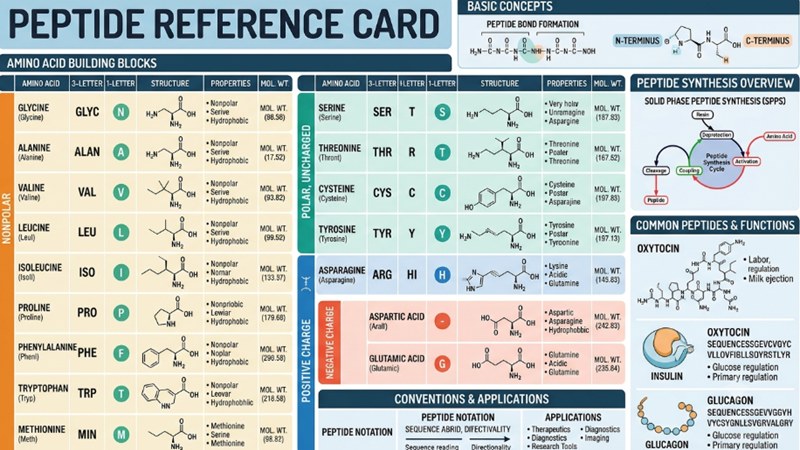
Between scientific abbreviations, molecular data, and technical terminology, the first time you look at a peptide reference card can feel like you’re trying to decode a secret language. Even with the best peptide app at your disposal, it’s normal to wonder where you should start.
Whether you’re researching peptides for educational purposes or simply trying to understand what all those numbers and acronyms mean, knowing how to read a reference card can save time and reduce confusion.
Thankfully, you don’t need a background in biochemistry to understand the basics. Once you know what information to look for and how each section is organized, peptide reference cards become valuable tools for quick, efficient research.
What Is a Peptide Reference Card?
A peptide reference card is a concise guide that summarizes important information about a specific peptide. Think of it as a fact sheet that gathers key details into one convenient place, making it easier to locate information without digging through lengthy scientific documents.
Depending on the source, a reference card may include details such as the peptide’s name, amino acid sequence, molecular weight, storage recommendations, and other technical specifications. The exact format may vary, but the goal of providing a quick overview of essential data remains the same.
Many researchers and enthusiasts use peptide reference cards as a starting point for learning about peptides. While the cards are useful on their own, digital tools can often help users cross-reference information and better understand scientific terminology.
What Are the Main Sections of a Peptide Reference Card?
Most peptide reference cards use a similar format. Once you understand what each section means, they become much easier to read and navigate.
Peptide Name and Alternate Names
The peptide name is usually displayed prominently at the top of the card. In some cases, you’ll also find alternate names, abbreviations, or research identifiers. Since the same peptide may be referenced differently across studies or suppliers, recognizing these alternate names can help prevent confusion during research.
Molecular Information
This section typically includes technical details such as molecular weight, amino acid sequence, and chemical formula. While these specifications may seem intimidating at first, they’re included to help identify and distinguish one peptide from another.
Storage and Stability Information
Most reference cards also provide storage guidelines, including recommended temperatures and handling instructions. These details help preserve peptide stability and ensure the information is interpreted within the proper context.
How Can You Read Each Data Point on a Peptide Reference Card?
A peptide reference card can look crowded at first, but you do not need to absorb everything at once. The trick is to read it in layers. Start with the peptide name, any alternate names, and the main category or purpose listed on the card. This gives you a quick sense of what you are looking at before you dive into the more technical details.
Next, look at the molecular information. The amino acid sequence shows the peptide’s building blocks, while its molecular weight helps identify it more precisely. You do not have to memorize these numbers. They are there for comparison, verification, and research context.
The storage information section is another section worth reading carefully. Peptides can be sensitive to temperature, moisture, and handling conditions, so this area helps explain how the material is typically referenced or maintained. Think of it as the “please don’t leave this in a hot car” section of the card.
If you run into abbreviations you do not recognize, pause and look them up instead of guessing. Many cards use shorthand because space is limited, not because the information is meant to be mysterious.
Tips for Reading Peptide Information More Efficiently
The best way to read a peptide reference card is to avoid treating it like a novel. You are not starting at chapter one and waiting for a plot twist. Instead, scan for the most useful details first.
Begin with the peptide name, then check for any alternate names to ensure you are researching the correct compound. From there, review the molecular details and storage notes. If the card includes warnings, handling notes, or source references, give those sections extra attention.
It also helps to compare information across reliable educational resources. Not every reference card uses the same format, and some may include more detail than others. Cross-checking can help you spot inconsistencies and build a better understanding of the peptide.
Confidence Comes With Time
Reading a peptide reference card may seem intimidating at first, but it becomes much easier once you know what each section is trying to tell you. Start with the name, review the molecular details, pay attention to storage information, and look up anything unfamiliar instead of guessing.
Eventually, these cards start to feel less like chemistry flashcards from another planet and more like practical research tools. With a little patience and the right resources, you can read peptide information more confidently, quickly, and accurately.