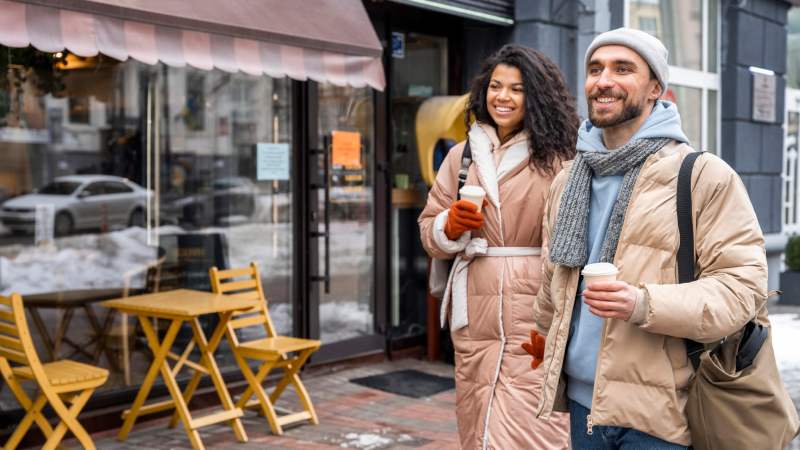
A few years ago everyone thought the small shop was finished. The big boxes had won. Online had won. The vibe was that anything local and independent was a charming little relic on its way out, sort of like a payphone or a video rental store.
That hasn’t really turned out to be true.
If you walk down a main street in almost any American city right now, the shops that are doing the best are not the ones with the recognizable logo on the sign. They’re the ones with one location, sometimes two, run by people you can actually find in the building. Something’s happening here that’s worth paying attention to, and it’s not nostalgia. It’s something more practical than that.
The Quiet Death Of The Generic Buying Experience
I used to live near a strip of chain stores, the kind of place where you could buy anything you needed in one Saturday afternoon. And I never felt anything about it. I’d walk in, walk out, drive home. The transaction barely registered.
Then I moved to a neighborhood with actual small shops. Tiny bookstore. A guy who only sells records. A coffee place where the same two people are always behind the counter. And something kind of weird happened. I started looking forward to errands. I’d walk to the bookstore even when I didn’t need a book. I’d stop at the record place just to see what was in.
That’s the thing the big chains have never quite figured out. People don’t just want stuff. They want a place. They want to walk in somewhere and have someone recognize them. They want to ask a question and get an answer from a person who actually knows.
What Boutique Retail Actually Means
The word boutique has gotten kind of overused. Every fast casual restaurant calls itself boutique now. So does every hotel with a slightly weird lobby. The word has lost some of its meaning.
But the real version of it is pretty specific. A boutique retailer is someone who handpicks their inventory. They’re not stocking based on a corporate planogram. They’re stocking based on what they actually think is good. If you ask them why they carry something, they can tell you. If you ask them what’s new, they have an opinion. They have skin in the game because the store is theirs.
That kind of curation used to be normal. Then it disappeared for about thirty years. And now it’s back, because people figured out that having ten thousand options of the same average thing is actually worse than having forty options of really good things.
The Crossroads Example
Kansas City has a neighborhood called the Crossroads Arts District. If you’ve never been, picture old warehouses with the brick still exposed, murals everywhere, galleries on the ground floor of buildings that used to be print shops. It’s the kind of neighborhood that fell into neglect after the warehousing and film distribution industry left, and got brought back starting in the 1980s by artists and small business owners. The area was officially named the Crossroads Arts District in 1999, and the revival has only picked up steam since.
The Crossroads is now one of the better examples in the Midwest of what happens when a neighborhood gets rebuilt around small operators instead of chains. Restaurants, galleries, design studios, specialty retail. Each storefront has its own personality. You walk down Southwest Boulevard or 18th Street and every block feels a little different from the last.
A boutique hemp-derived retailer in the Crossroads, Big Chiefs Kush, is a good example of how this works in practice. The shop is for adults 21 and older and takes the boutique model seriously. The inventory rotates every couple of weeks. The staff actually know what they carry. Customers can see and smell products at the counter before they buy. That kind of in-person, transparent retail is exactly what the Crossroads has always been about, and it’s the opposite of how a big chain would run the same kind of store.
Why Customers Are Coming Back To This Model
There are a few reasons the small shop is having a moment, and they’re pretty unglamorous.
First, the chains kept cutting back on staff. You walk into a big retailer now and you might not see an employee for twenty minutes. The person behind the counter, when you find them, doesn’t know the inventory because they were hired three weeks ago and they cover six departments. That’s not their fault. It’s a corporate decision. But it’s made the chain experience genuinely unpleasant.
Second, online shopping turned out to be exhausting. People liked the convenience at first. Then they got tired of scrolling through hundreds of nearly identical listings, reading reviews that may or may not be fake, and waiting for boxes that may or may not contain what they thought they ordered. A small shop with a person who can answer your questions has become, weirdly, the fast option.
Third, people care more about where their money goes than they used to. They know that spending forty dollars at a local shop keeps more of that money in their neighborhood than spending it at a chain. That’s not a moral argument anymore. It’s just math, and people have noticed.
The Storefront As A Statement
There’s something else going on too. A small shop is a kind of statement about a neighborhood. When a boutique opens in a district like the Crossroads, it’s a signal. It says the area is worth investing in. It says somebody believed in the block enough to sign a lease.
When you walk into a place like that, you’re not just buying a product. You’re participating in the neighborhood. The shop owner pays rent to a local landlord. They probably get coffee from the place next door. They hang a piece from the gallery down the street on their wall. The whole district is a kind of ecosystem, and every storefront is a node in it.
That’s why losing one of these places hits differently than losing a chain. When a Target closes, another one opens. When the bookstore on the corner closes, that bookstore is gone. The neighborhood loses a piece of itself.
What This Means For The Next Few Years
I don’t think the chains are going anywhere. They’ll still exist. People will still buy paper towels in bulk at warehouse stores. That’s fine.
But the actual interesting retail, the kind that shapes a neighborhood and gives a city its character, is going to keep coming from small operators. The trend lines have been pointing that way for about a decade now and they’ve only accelerated. The pandemic taught a lot of people that the chain experience was hollow. They’re not going back.
So if you have a small shop in your neighborhood that you’ve been meaning to check out, this is your sign. Go in. Talk to the person at the counter. Ask them what they like. That’s the whole point of the model, and it only works if the rest of us actually show up.
The big boxes have had their run. The small shop is back, quietly, and it might be one of the best things to happen to American cities in a long time.